

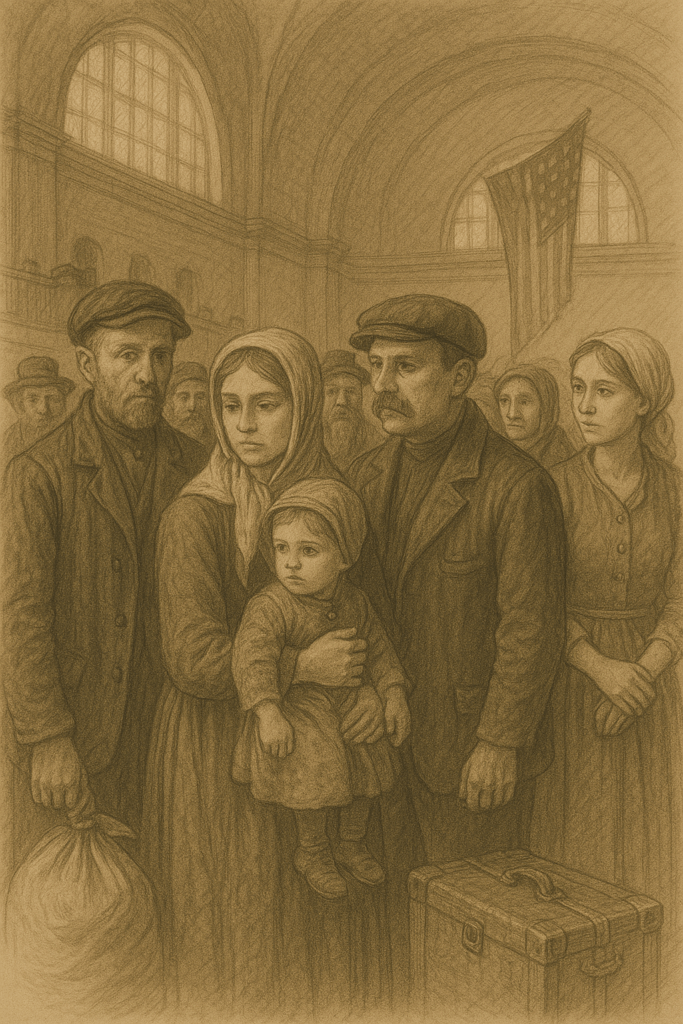
One of the most enduring myths about Ellis Island is that officials changed immigrants’ names upon arrival. Generations of families have explained altered surnames or Anglicized spellings by saying “it was changed at Ellis Island.” But the reality is far more nuanced—and understanding it is vital for genealogists.
Passenger manifests were created in Europe, usually at the port of departure, by steamship companies. These lists recorded each traveler’s name, age, occupation, last residence, and destination. When immigrants arrived at Ellis Island, inspectors used these manifests to verify identities. They did not have time—or authority—to arbitrarily change names. Their main task was to ensure that passengers matched the documents presented.
So how did names change? In many cases, immigrants themselves adapted their names after arrival. They simplified spelling, dropped diacritical marks, or adopted English versions to fit into American society. Clerks in state and local offices, unfamiliar with foreign spellings, often introduced variations in vital records, censuses, and naturalization papers. Over time, these changes became permanent.
This myth persists because name changes were real, just not at Ellis Island itself. For genealogists, it means that the original immigrant name usually appears in the manifest, but later American records may show modified forms. Understanding this helps researchers avoid false assumptions and trace families across multiple name variants.
The lesson is clear: Ellis Island officials did not rename your ancestors. But social pressures, bureaucratic errors, and assimilation did. Recognizing this distinction allows genealogists to approach records with both skepticism about family lore and respect for the complex realities of immigrant adaptation.
References
· Cannato, Vincent J. American Passage: The History of Ellis Island. HarperCollins, 2009.
· Statue of Liberty–Ellis Island Foundation. Ellis Island Name Change Myth. https://www.libertyellisfoundation.org.
· FamilySearch Wiki. Immigration and Naturalization Records.