
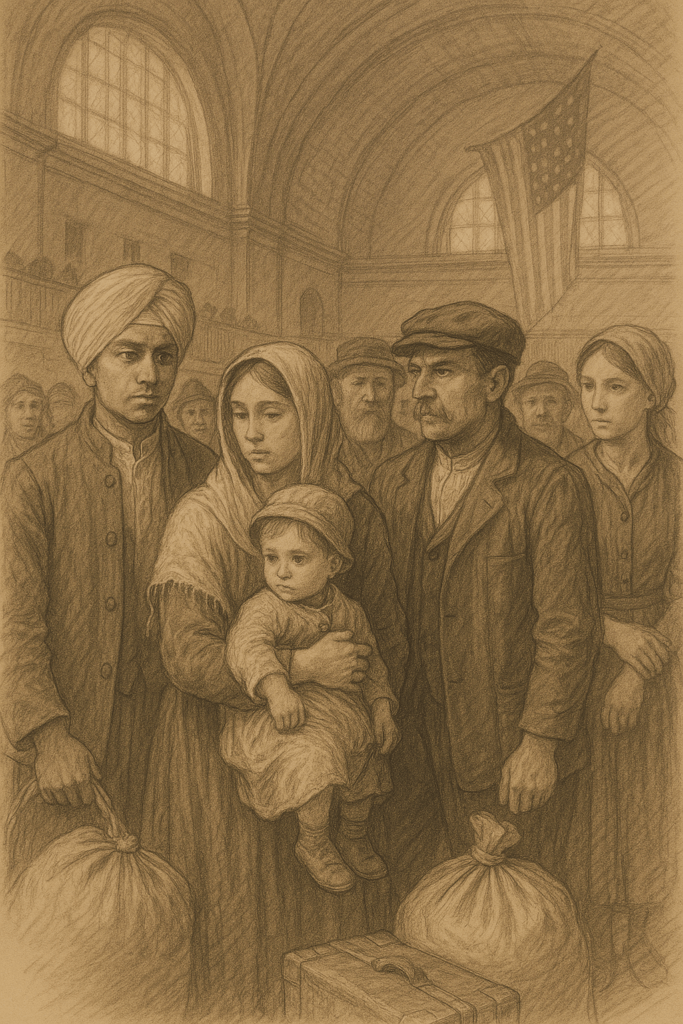
Ellis Island processed immigrants from around the world, though the majority came from Europe. Between 1892 and the 1920s, the island witnessed massive waves of arrivals that reshaped the cultural fabric of the United States. For genealogists, knowing these migration patterns is key to contextualizing family histories.
The earliest arrivals included large numbers of Irish, Germans, and Scandinavians. By the turn of the 20th century, “new immigrants” from Southern and Eastern Europe dominated: Italians, Poles, Slovaks, Hungarians, Greeks, and Russian Jews fleeing pogroms. Each group brought distinct languages, traditions, and religious practices. Smaller numbers came from the Middle East, the Caribbean, and Asia (though restrictive laws limited Asian immigration).
The diversity was striking. A single day at Ellis Island might see Sicilian laborers, Polish peasants, Jewish families with bundles of possessions, and Greek fishermen. Inspectors and translators had to manage dozens of languages and dialects. The blending of cultures at Ellis Island reflected broader patterns of American immigration.
For genealogists, understanding the demographics helps explain why ancestors arrived when they did. Economic hardship, political unrest, religious persecution, and industrial opportunities in America all shaped migration flows. Recognizing these contexts allows researchers to frame their ancestors’ journeys within global history.
Ellis Island was not just a place of entry—it was a crossroads of humanity. Its records capture this diversity in detail, preserving evidence of the millions who arrived seeking new lives in a new land.
References
- Alan M. Kraut. Silent Travelers: Germs, Genes, and the ‘Immigrant Menace.’ Johns Hopkins University Press, 1994.
- Vincent J. Cannato. American Passage. HarperCollins, 2009.
- Statue of Liberty–Ellis Island Foundation. Who Came Through Ellis Island.