
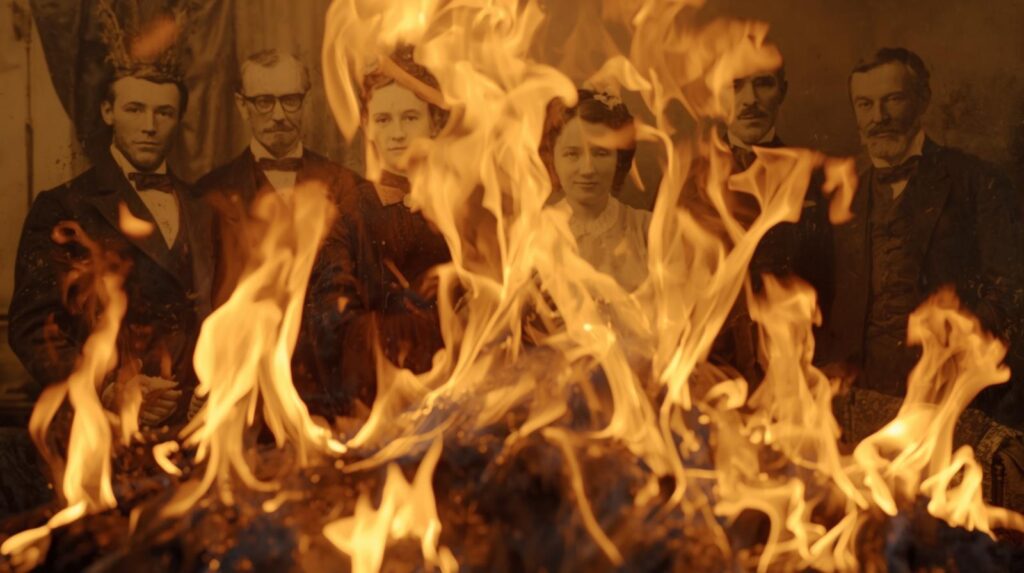
Record loss narrows paths—but it doesn’t end the journey. Use substitutes and disciplined method to rebuild proof.
A. Start with a location-anchored research question
Frame the scope, then survey all plausible sources.
B. Apply the FAN Club method (Friends, Associates, Neighbors)
Witnesses, neighbors, church rolls, and tax lists can be just as revealing as direct records.
C. Reconstruct land without deeds
Rely on tax lists, state/federal land records, neighbors’ deeds, and plat mapping.
D. Rebuild probate in absence of wills
Legal notices in newspapers, guardianship mentions in school censuses, and “estate of” tax entries fill gaps.
E. Marriages without marriage books
Look to church registers, minister returns, children’s baptisms, and newspapers.
F. Vital events from non-vital sources
Cemeteries, funeral ledgers, military pensions, and Bible records substitute well.
G. Use state and federal stand-ins systematically
Censuses, Freedmen’s Bureau records, and land entry case files preserve identity details.
H. Exploit time-bound legal processes
Road orders, stray books, and tavern licenses prove presence and relationships.
I. Method: assemble, correlate, resolve
Keep research logs, build correlation tables, and resolve conflicts explicitly—this reconstruction is your genealogical proof.
References
Genealogy Research in Burned Counties.” Family Tree Magazine. https://familytreemagazine.com/records/courthouse/doing-genealogy-in-burned-counties/.
Family Locket. “5 Tips for Research When the Courthouse Burned.” https://familylocket.com/5-tips-for-research-when-the-courthouse-burned/.
“3 Effective Strategies for Overcoming Record Loss.” Heritage Discovered. https://www.heritagediscovered.com/blog/burned-counties-genealogy
“Researching the Burned Counties.” Trace Your Past. https://www.traceyourpast.com/articles/researching-the-burned-counties.
The Occasional Genealogist. “Success in Burned Counties (Easy).” https://www.theoccasionalgenealogist.com/2016/11/success-in-burned-counties-easy.html.