
Part I • From Crime Scene to Genetic Clue: How the Investigation Began
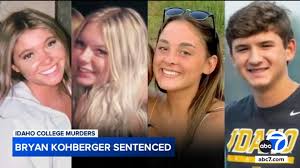
On a November night in 2022, tragedy struck the University of Idaho community when four students—Madison Mogen, Kaylee Goncalves, Xana Kernodle, and Ethan Chapin—were fatally stabbed in a rented off-campus house. Shocked investigators combed the scene for evidence, determined to find any lead that could pinpoint the killer
Amid the grisly scene investigators found a tan leather sheath for a KA-BAR knife on Mogen’s bed. Lab analysis revealed trace (“touch”) DNA on the sheath. Although the DNA matched no profiles in the FBI’s CODIS criminal database, it offered a critical lead
Traditional methods had failed. Investigators turned to Investigative Genetic Genealogy (IGG)—an emerging technique combining forensic DNA analysis with genealogical research. They submitted the DNA to Othram, a Texas-based forensic genetics lab, to construct a broader DNA profile from the degraded sample
Othram provided strong “family hints,” though the closest match shared only around 70.7 centimorgans—indicative of a potential great‑great‑grandparent. Because of privacy limitations, Othram could not directly identify the suspect and eventually passed the case on to the FBI
The FBI then uploaded the profile into public genealogy databases—including GEDmatch and MyHeritage—even though these uses were in tension with DOJ guidelines. The databases yielded closer relatives, one estimated match sharing about 250 cM of DNA
Genealogists then constructed family trees from these matches, working through generations to identify potential suspects based on age, location, and proximity to the crime. These clues gradually narrowed the foil to a specific family living in the relevant area
Meanwhile, investigators connected a white Hyundai Elantra to the crime, which had been seen looping near the victims’ home that night. Tracking vehicles matching the description, they traced one to Bryan Kohberger—a Washington State University criminology graduate student—who later drove it to Pennsylvania with his father for the holiday
Public tips and surveillance data strengthened suspicion. But the genetic lead was paramount. Law enforcement obtained DNA from Kohberger’s father’s trash and found a familial relationship to the crime scene sample—bringing Kohberger himself firmly into focus
On December 30, 2022, Kohberger was arrested at his parents’ home in Pennsylvania. Investigators recovered a KA-BAR knife sheath, cleaning supplies, and other items at the residence. Detailed forensic and genealogical steps had converged to break open
The investigation showcased how IGG can transform cold-case work when traditional DNA hits a roadblock. By blending trace DNA analysis, genetic genealogy, and old‑fashioned detective work, law enforcement rapidly closed in—marking a turning point in crime-solving methodologies.
-
State of Idaho v. Bryan Christopher Kohberger, Order on Defendant’s Motion to Suppress Genetic Information, CR01-22-2815 (Latah County Dist. Ct., Feb. 19, 2025). Available at: Idaho Supreme Court Repository.
-
Probable Cause Affidavit in Support of Arrest Warrant for Bryan Christopher Kohberger, CR29-22-2805 (Latah County Dist. Ct., Dec. 29, 2022). Filed by Corporal Brett Payne, Moscow Police Department.
-
Allyn, Bobby. “How Genetic Genealogy Led to the Arrest in the Idaho Killings.” NPR, Jan. 5, 2023. https://www.npr.org/2023/01/05/1146972292/idaho-killings-genetic-genealogy-dna.
-
Pagones, Stephanie. “Bryan Kohberger Case: FBI DNA Tactics Didn’t Violate Law, But They Raise Another Public Safety Concern.” Fox News, Feb. 22, 2023. https://www.foxnews.com/us/bryan-kohberger-case-fbi-dna-tactics-didnt-violate-law-but-they-raise-another-public-safety-concern.
-
Peiser, Jaclyn. “How DNA Evidence Played a Role in Arrest of Suspect in Idaho Killings.” Washington Post, Jan. 3, 2023. https://www.washingtonpost.com/nation/2023/01/03/idaho-killings-dna-evidence/.
-
Kennett, Debbie. “Investigative Genetic Genealogy: The Use of DNA for Criminal Investigations.” Forensic Science International: Genetics 56 (2022): 102625. https://doi.org/10.1016/j.fsigen.2021.102625.
-
Greytak, Emily M., CeCe Moore, and Steven L. Armentrout. “Genetic Genealogy for Cold Case and Active Investigations.” Forensic Science International 299 (2019): 103–113. https://doi.org/10.1016/j.forsciint.2019.03.039.