

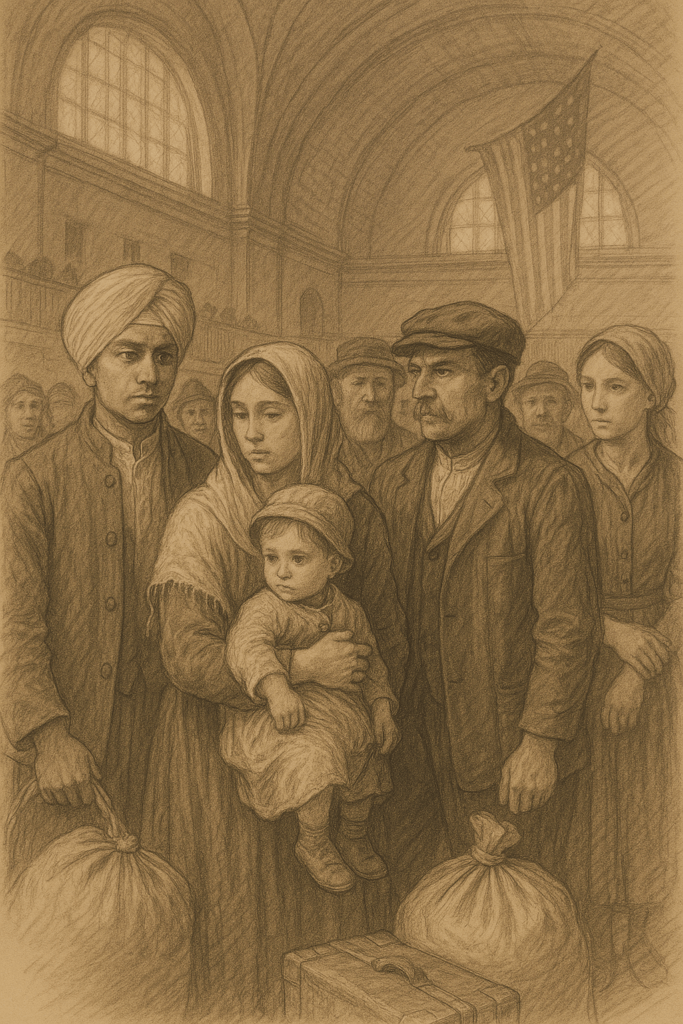
While passenger manifests are central, Ellis Island generated other records that genealogists should not overlook. These additional sources often reveal details about immigrants who faced challenges during the entry process.
Detention records list individuals held temporarily for medical treatment, legal hearings, or administrative issues. These logs sometimes note the reason for detention and the outcome, whether release or deportation. For families whose ancestors disappeared from manifests, these records may explain the gap.
Hospital records from Ellis Island’s medical complex document treatment for contagious diseases, childbirth, and other health issues. Though not all survive, some can be found in the U.S. National Archives. They provide rare glimpses into the health challenges faced by new arrivals.
Board of Special Inquiry files recorded hearings for immigrants whose admissibility was questioned. These records may contain testimonies, affidavits, or additional biographical data. For genealogists, they add depth and personal voice to the immigration story.
Deportation records identify those who were denied entry and returned to their countries of origin. While painful to read, they are crucial for understanding family histories.
Together, these records remind genealogists that Ellis Island was not only a place of arrival but also of struggle. They preserve the voices of those who faced obstacles and show the resilience of families who persevered despite setbacks.
References
· National Archives. Immigration Records. https://www.archives.gov/research/immigration.
· Vincent J. Cannato. American Passage. HarperCollins, 2009.
· Statue of Liberty–Ellis Island Foundation. Ellis Island Records.