
Few phrases chill a researcher like “burned county.” But understanding what burned county really means—and how record loss occurred—turns dread into a plan.
What is a “burned county”?
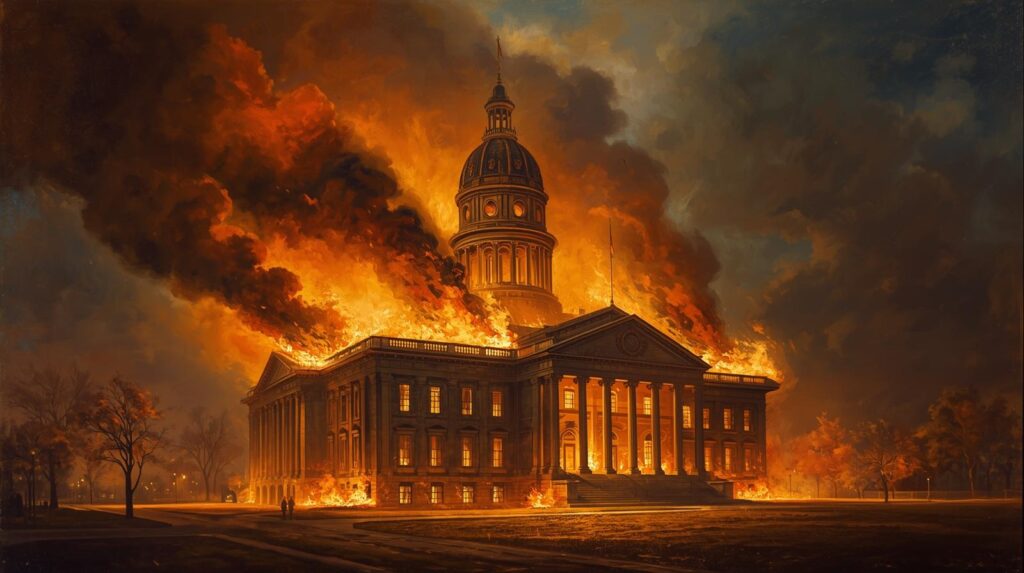
A “burned county” is shorthand for any jurisdiction where core local records were destroyed or substantially damaged, often at the courthouse level. Despite the name, loss wasn’t always from fire. Causes included war, floods, mold, pests, theft, negligence, or even well-intended “records purges.”
What typically went missing?
The most common losses were deeds, probate files, marriages, and tax rolls—though sometimes only certain date ranges or certain offices’ collections were destroyed.
Key misconceptions
– “Everything is gone.” Rarely true. Loss is often partial.
– “Burned county means no records anywhere.” State-level copies, federal census and land records, newspapers, and church registers often survive.
– “If it isn’t online, it doesn’t exist.” Many substitutes remain offline in archives or manuscript collections.
Your mindset shift
Treat burned counties as evidence-diversification problems. You’ll rely less on one “golden” record and more on multiple sources that, together, meet the Genealogical Proof Standard.
References
- FamilySearch Wiki. “Burned Counties Research.” FamilySearch. https://www.familysearch.org/en/wiki/Burned_Counties_Research.
- “3 Effective Strategies for Overcoming Record Loss.” Heritage Discovered. https://www.heritagediscovered.com/blog/burned-counties-genealogy.
- “Researching the Burned Counties.” Trace Your Past. https://www.traceyourpast.com/articles/researching-the-burned-counties.
- “5 Steps to Genealogy Research in Burned Counties.” Family Tree Magazine. https://familytreemagazine.com/records/courthouse/doing-genealogy-in-burned-counties/.
- The Occasional Genealogist. “Success in Burned Counties (Easy).” https://www.theoccasionalgenealogist.com/2016/11/success-in-burned-counties-easy.html.