
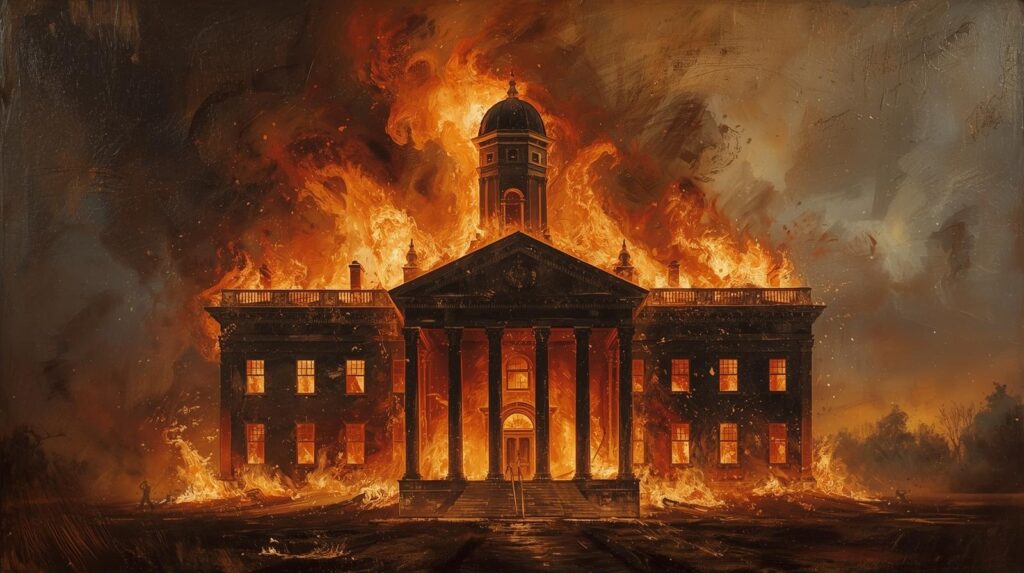
Burned counties are daunting, but with the right strategies you can still reconstruct family histories. The key is to think creatively and cast a wide net.
Start with the big picture
Before searching substitutes, build a “record expectation checklist.” Write down which records should exist for your county and time period—deeds, probate, marriages, court minutes, tax rolls. Then check which sets were lost and why. A courthouse fire in 1870 may mean you only lost earlier deeds, while probate survived in another office.
Focus on boundaries and neighbors
County boundaries shifted often, and burned counties were frequently later divided. Families who lived near lines might have used neighboring counties for business. Deeds, marriages, or court records could appear in adjoining jurisdictions. Always look outward as well as inward.
Follow the paper trail of officials
Local officials often submitted copies of reports to state-level offices. Clerks sent tax lists, probate abstracts, or voter tallies to the state auditor. Legislative petitions and governors’ correspondence can also preserve names of residents, roads, or disputes.
Use a cluster approach
Direct evidence may be gone, but friends, associates, and neighbors (the FAN Club) stabilize your research. Who lived nearby, signed bonds, or witnessed deeds? Tracking clusters across time and place fills gaps left by missing files.
Leverage maps and geography
Overlay historic maps, atlases, and Sanborn fire maps with modern GIS tools to re-establish neighborhoods. Geography becomes an anchor when documents are scarce.
References
- FamilySearch Wiki. “Burned Counties Research.” FamilySearch. https://www.familysearch.org/en/wiki/Burned_Counties_Research
- “5 Steps to Genealogy Research in Burned Counties.” Family Tree Magazine. https://familytreemagazine.com/records/courthouse/doing-genealogy-in-burned-counties/
- The Occasional Genealogist. “Success in Burned Counties (Easy).” https://www.theoccasionalgenealogist.com/2016/11/success-in-burned-counties-easy.html